Audio Technology
Audio Technology
Media

Newsroom

Media

Articles, blogs, press coverage, and video content from Audio Technology.

Audio Technology delivers a professional AVL environment for Alexandria’s Université Senghor
article
articleJuly 21, 2026

Audio Technology delivers a professional AVL environment for Alexandria’s Université Senghor

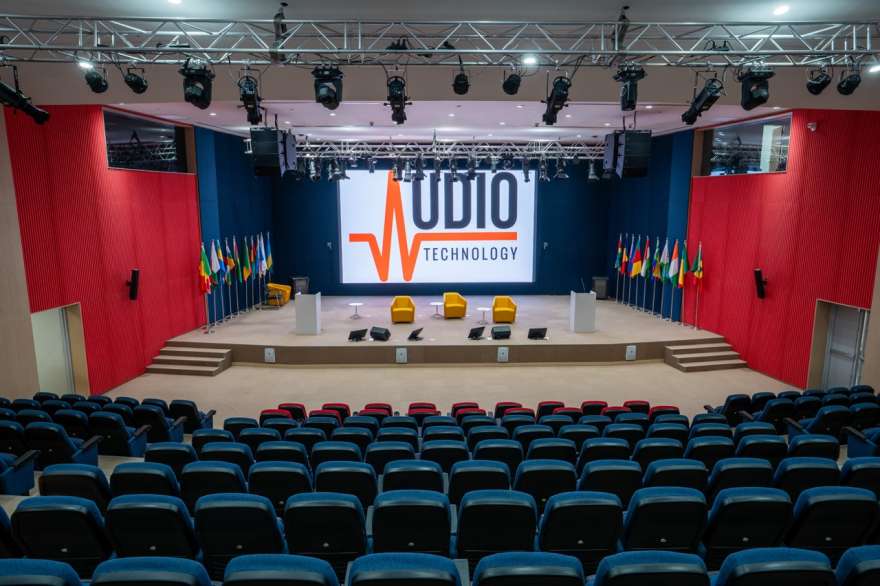
Audio Technology delivers a professional AVL environment for Alexandria’s Université Senghor, combining hybrid learning infrastructure with a theatre capable of supporting diplomatic eventsThe official inauguration of Université Senghor’s new campus in Alexandria was always going to attract international attention. Opened during a visit by French president Emmanuel Macron and Egyptian president Abdel Fattah el-Sisi, the university’s new headquarters represents a significant symbol of educational cooperation between Egypt and France. Behind the political significance, however, sat a more practical challenge: creating a venue capable of functioning simultaneously as an educational institution, conference facility and professional performance environment.Tasked with delivering the audiovisual infrastructure across the campus, Egyptian integrator Audio Technology supplied and installed systems spanning classrooms, laboratories, boardrooms, lecture halls, meeting spaces and the university’s main theatre. While hybrid learning and campus-wide AV control formed an important part of the wider deployment, the technical centrepiece of the project became the university’s multifunctional theatre and event venue. Beyond day-to-day academic activities, the theatre is expected to host conferences, official ceremonies, visiting delegations and cultural performances within a single integrated environment“Routing large quantities of audio, power, RF and DMX cabling through finished ceilings and confined spaces required careful site coordination,” adds Ibrahim. “Extensive onsite adjustments and optimisation were required to ensure both technical performance and visual integration.”The completed venue was ultimately designed to support a broad range of applications. Given the university’s international profile, support for governmental and diplomatic events also formed part of the operational brief.While the theatre formed the project’s technical focal point, Audio Technology also implemented a wider campus AV infrastructure designed to support both in-person and hybrid learning environments across the university.Philips 86BDL4052E interactive displays were installed throughout classrooms and laboratories, while Uniguest U670 PTZ instructor-tracking cameras and TP5-HDMI-QUAD lecture recording systems were integrated to support distance learning and e-learning applications. Audio systems incorporating microphones, BSS BLU-100 DSP platforms and TOA PC-648R, TZ-606 and PC-2852 loudspeakers were deployed throughout teaching and meeting spaces to ensure speech clarity across both local and remote environments.The primary objective of the project was to create a modern educational facility aligned with international university standards. “Another major objective was achieving professional production quality while maintaining operational simplicity for the university’s internal technical team,” explains Tuodour Ibrahim, senior design and pre-sales engineer, pro systems at Audio Technology. “Speech intelligibility, audience coverage consistency, lighting flexibility and long-term reliability were all considered essential performance targets. The university also wanted the venue to reflect the institution’s international identity and cultural importance through high-end technical infrastructure.”Furthermore, the project arrived with an additional complication. Audio Technology entered the site during the final stages of construction, after most architectural finishes, wall cladding, ceilings and fixed seating installations had already been completed.“This significantly increased the complexity of the integration process and required customised installation methodologies to preserve the finished architectural appearance,” continues Ibrahim.The new setup inside the theatre centres around a JBL Professional sound reinforcement system built on the manufacturer’s BRX line array platform. The system combines BRX308-LA line array loudspeakers with BRX325SP powered dual-15-inch subwoofers for primary reinforcement, while JBL Control 28-1 loudspeakers provide front-fill coverage throughout the venue. JBL PRX908 systems were deployed for stage monitoring, complemented by JBL studio reference monitors within the control environment. Audio control and signal management are handled through a Soundcraft Si Impact digital mixing console and Soundcraft digital stageboxes, with BSS Soundweb London processors providing centralised DSP management and system optimisation.Meeting rooms also received discussion systems integrated with PTZ camera tracking functionality, while the theatre incorporated a large Absen CPS2.5 dvLED videowall with a 2.5mm pixel pitch to support presentations and event content. The project additionally included a simultaneous interpretation system from Televic, reflecting the university’s multilingual and international operational requirements.Campus-wide AV control is standardised around Crestron processors, allowing centralised management of systems across different teaching and conferencing spaces.Audio Technology’s wider integration team involved approximately 25 engineers and installation specialists, working alongside architectural, electrical and structural contractors throughout the final stages of construction. Tight project deadlines linked to the presidential inauguration required accelerated installation schedules and extensive testing ahead of the official opening. Commissioning included loudspeaker optimisation, DSP programming, RF coordination, lighting scene testing and full operational rehearsals under live event conditions before final acceptance by the university.Wireless infrastructure came from Shure and includes SLX-D wireless systems, handheld microphones, bodypack transmitters, DuraPlex headset microphones and podium microphones. Active antenna and RF distribution systems were also integrated to support stable wireless operation during conferences, presentations and live performances.“The selected manufacturers were chosen based on performance reliability, international reputation, integration compatibility and suitability for professional theatre environments,” notes Hany Emad, senior design engineer within Audio Technology’s AV department. “JBL Professional systems were selected because of their strong performance in speech intelligibility, controlled coverage and live event reinforcement applications. The venue needed to support both speech-focused academic activities and higher-energy live events within the same environment and the BRX platform provided the necessary output power and acoustic consistency required for the theatre environment.”The lighting infrastructure inside the theatre spans Lightsky profile fixtures, Fresnel fixtures and moving heads alongside LED bar systems and DMX distribution networks. Audio Technology also supplied professional truss systems from Fenix, stage rigging infrastructure and the venue’s wider signal and power distribution systems.According to the team, balancing aesthetics with performance became one of the defining elements of the project. Loudspeaker suspension angles, truss positioning and lighting focus points all had to be carefully coordinated to preserve architectural sightlines and the finished appearance of the theatre while still achieving the required production performance.Despite the compressed timeline and integration constraints, Audio Technology views the project as one of its most significant recent education-sector deployments, not only because of the university’s international profile, but because of the complexity involved in merging professional live-event infrastructure with modern educational technology inside a single unified environment.“This project demonstrates our ability to deliver solutions at international standards while adapting to complex real-world construction conditions,” concludes Andrew Helmy, senior sales account manager at Audio Technology. “It also highlights the company’s capability to bridge the gap between educational infrastructure and professional live-event technology, creating a venue that serves both academic and cultural purposes at a very high operational level.”

Read
Shaping the sound of the capital
article
articleApril 14, 2026

Shaping the sound of the capital

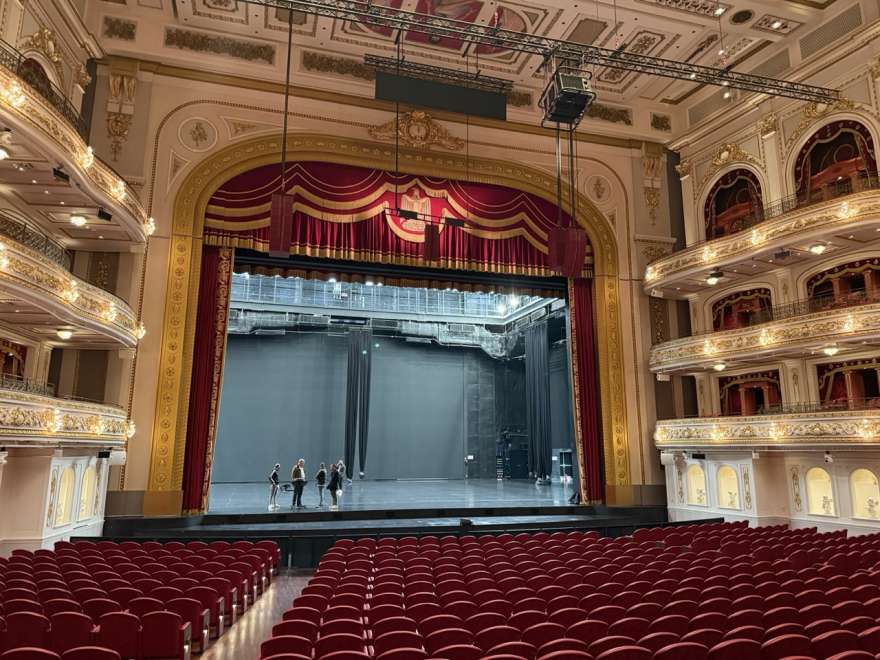
The New Capital Cairo Opera House brings together multiple performance venues within a City of Arts complex, with Audio Technology delivering professional audio and AV systems across the siteConceived as a flagship development within Egypt’s New Administrative Capital, the New Capital Cairo Opera House represents a significant expansion of the country’s performing arts infrastructure. Rather than a single large auditorium like its counterpart in the main city, the project forms part of a broader City of Arts complex, incorporating multiple performance venues, rehearsal spaces, public circulation areas and supporting buildings designed to host a wide programme of cultural and entertainment activity.For local systems integrator Audio Technology, the project combined two distinct but closely linked scopes of work: supplying, commissioning and tuning professional audio systems for the main performance venues, while also assuming responsibility for the design, installation and commissioning of AV systems throughout the non-auditorium spaces. In parallel, the company delivered an extensive stage engineering and machinery package in cooperation with German stage systems manufacturer Waagner-Biro.The New Capital Cairo Opera House comprises three principal performance venues: the main concert hall, a drama theatre and an additional performance space, supported by rehearsal rooms and ancillary spaces. Beyond these, the wider complex includes public areas, outdoor zones and a mosque, all requiring integrated background audio and AV solutions aligned with the building’s architecture.“The project was effectively divided into two parts,” explains Audio Technology systems designer Mario Abadeer. “For the main halls, we supplied the professional audio systems specified by the consultant and carried out commissioning and tuning. For the rest of the complex, our engineers were responsible for the complete AV design, installation and commissioning.”Across the performance venues, L-Acoustics systems form the backbone of the sound reinforcement design. In the main concert hall, the system is built around dual main clusters, supported by SB18 subwoofers and a comprehensive deployment of X Series loudspeakers providing fill coverage across the audience areas. These include 5XT, X8 and X12 models, selected to address differing coverage requirements while maintaining tonal consistency throughout the space.The drama theatre adopts a different approach, centred on a Syva-based system, again supplemented by X Series fills and a dedicated centre cluster to support spoken-word performance and theatrical production. Rehearsal rooms within the complex are also equipped with solutions from the French manufacturer, providing continuity between rehearsal and performance environments.Amplification across the performance venues is handled via the LA4X platform. “Each space has a significant channel count,” says Abadeer. “That meant commissioning was a detailed process, checking every channel to ensure the correct presets were applied and that each loudspeaker was behaving exactly as intended.”Wireless audio forms another key part of the system architecture, with Shure Axient Digital Wireless deployed across the performance spaces. The system supports a wide range of production requirements, from orchestral and theatrical use through to spoken-word events, while SM series microphones provide additional flexibility for performance and production workflows.Commissioning the systems required detailed programming and verification. With early elements delivered during the Covid period, manufacturer travel was restricted, increasing reliance on local expertise. “Beyond loudspeaker alignment and tuning, the most time-consuming aspect was system programming and verification,” Abadeer explains. “Every signal path, amplifier channel and preset had to be checked. And as each room had a large number of channels, the process was extensive.”Tuning focused on detailed measurements across audience areas, delay alignment and final optimisation for each space’s acoustic conditions. “We worked hard to tailor each system precisely to its environment,” Abadeer adds, “but, beyond the extensive procedure, we didn’t encounter any fundamental technical obstacles.”While audio and AV systems formed a visible part of the integration scope, the scale of Audio Technology’s involvement also extended significantly into stage engineering. In cooperation with Waagner-Biro, the company delivered the stage engineering packages for the opera house, concert hall and drama theatre, including installation and after-sales services. The scope included orchestra pit elevators, seating wagon systems, adjustable proscenium elements and unified control and emergency stop systems.In the main hall alone, up to 72 multipurpose fly bars were installed, with drive system winches arranged at grid level. Loudspeaker cluster hoists and over-stage lighting trusses were integrated within the wider machinery framework.A substantial element of this work involved local steel fabrication. Audio Technology fabricated approximately 700 tonnes of welded steel construction and machined components in Egypt, while Waagner-Biro supplied motors and drive mechanisms. Installation was executed by Audio Technology under Waagner-Biro’s supervision.The moveable seating towers, reaching heights of approximately 20m and weighing around 85 tonnes each, required precise mechanical and structural coordination to ensure stability and smooth electric drive operation. “Keeping the drive system columns vertical, particularly with column heights of around 9m, was extremely challenging,” Abadeer notes.Across the non-auditorium spaces, Audio Technology was responsible for designing and integrating AV systems that balanced technical capability with day-to-day usability, particularly as the venue moved towards operation without a fully established in-house technical team.“We became involved at an early stage, working alongside the consultant during the transition from conceptual design to equipment selection,” says Audio Technology’s AV spokesperson, Jacko Agaiby. “Each venue operates on standalone AV switching, which ensures full operational independence between spaces while maintaining consistent system behaviour across the wider site.”Resilience and redundancy were approached pragmatically. “Redundancy was assessed based on application criticality,” Agaiby explains. “Additional layers were introduced where they offered genuine operational value, rather than complexity for its own sake.”The extended project timeline also influenced technical decisions. Design and tender phases extended beyond 18 months, with architectural changes continuing throughout development. “Many adjustments were made after the design phase because of architectural changes,” notes Agaiby. “On long-term cultural projects like this, one of the biggest risks is misalignment between stakeholder timelines and shifting priorities.”As the venue moved towards operation, Audio Technology remained closely involved. With no permanent in-house technical team initially in place, the company provided hands-on support during early events and performances. “That ensured continuity as the venue came online,” says Abadeer. “Later training was delivered in a cascaded format, tailored to different stakeholders based on their operational responsibilities. This allowed the teams to build confidence progressively.”According to the team, only minor refinements were required following handover, primarily to fine-tune workflows once systems began to be used under live production conditions. Feedback from early use has been positive, with operators reporting smooth operation across both performance and public spaces.Looking back, both Abadeer and Agaiby describe the project as a defining milestone. “It stands among the most significant large-scale venues we’ve delivered locally,” Abadeer reflects.For Audio Technology, the New Capital Cairo Opera House reinforces the importance of end-to-end responsibility and local support. “Local sustainment capability was critical to protecting the integrity of the systems over time,” says Agaiby. “The project demonstrates what can be achieved when precision, partnership and turnkey delivery come together at scale.”

Read
Audio Technology elevates AFSA conferencing
article
articleJanuary 20, 2026

Audio Technology elevates AFSA conferencing

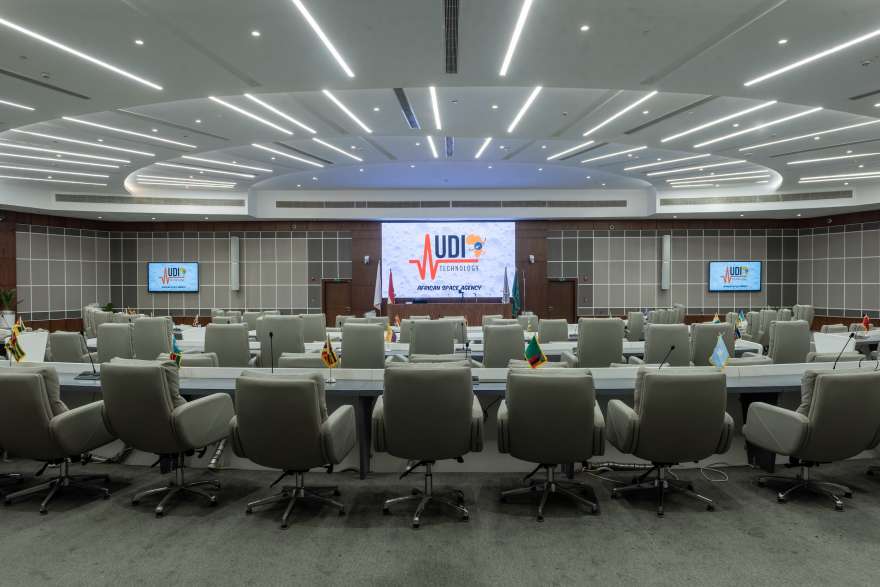
Audio Technology has completed a long-term audiovisual and conferencing project at the headquarters of the African Space Agency (AFSA) in Egypt's Space City, New Cairo, delivering a fully automated system for the organisation’s main conference hall. The complex project began in 2020 and reached completion in 2025, reflecting the scale of the installation.AFSA’s objective was to create a conference environment capable of supporting high-stakes, multilingual international meetings, with technology that could underpin structured debate, voting and interpretation for continental cooperation.Audio Technology was responsible for the full system integration. For visuals, the hall has been installed with an indoor direct-view LED video wall from Absen. With a P2.5mm pixel pitch and a surface area of more than 18m2, the display was selected to provide clear, detailed imagery for formal presentations and conferences. The screen is managed via Crestron Electronics, which also acts as the central switching and control platform for the entire room.Audio coverage presented one of the main technical challenges. The brief required even sound distribution across the hall while limiting the number of speaker positions. This was achieved using two JBL Professional CBT 1000 line array speakers positioned at the front of the room. The controlled dispersion of the CBT design allowed full coverage from only two locations, with audio processing handled by Soundcraft Si Series digital mixers.For conferencing and discussion, 59 Televic Confidea FLEX delegate units were installed, providing integrated voting and camera tracking. These are supported by a Shure wireless microphone system comprising four SLXD dual receivers with SM58 handheld transmitters, four SLXD1 bodypack transmitters with DH5 headsets, and four MX418 gooseneck microphones. Multilingual support is delivered through a Televic simultaneous interpretation system, with 120 receivers enabling interpretation in eight languages.All components are brought together through a single Crestron touch panel interface, allowing operators to manage visuals, audio, microphones and interpretation without manual reconfiguration.Audio Technology’s regional pro AV pre-sales and design manager, Jacko Makram, described the installation as “a proud moment,” adding that the completed hall now functions as “a powerful platform for high-stakes diplomacy, combining visual clarity, precise audio, structured discussion tools and multilingual capability in a unified system.”

Read
Audio Technology to distribute Epson in Egypt
article
articleJanuary 27, 2026

Audio Technology to distribute Epson in Egypt

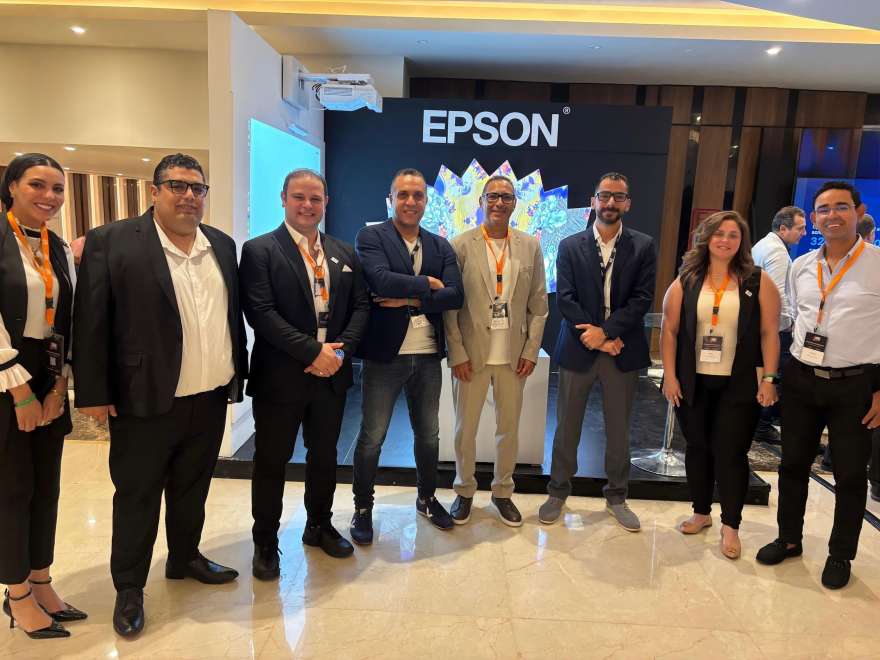
Audio Technology has been appointed as the exclusive distributor for Epson projection solutions in Egypt. The partnership is aimed at broadening market access to the brand’s projection technologies across the corporate, education, government and entertainment sectors.“We are very excited about our partnership with Audio Technology in Egypt,” commented Ahmad Abuzannad, regional sales manager at Epson. “With over 30 years of deep expertise in the audiovisual industry, Audio Technology brings an exceptional level of technical excellence and market insight, their highly skilled team and strong local presence make them an ideal partner for Epson’s professional video projector range as we expand our footprint and deliver world-class visual solutions across key sectors in Egypt.”Audio Technology is headquartered in Cairo, with a main office and service centre located in Sheraton Heliopolis. The distributor also boasts multiple showrooms across Cairo, including locations in Heliopolis, New Cairo, Sheikh Zayed and 6th of October City. Through the deal, the company will leverage its local expertise and strong network to enhance Epson’s presence in the country.“This partnership marks an exciting next chapter for Audio Technology as we align with an industry-leading innovator,” commented Jacko Makram, regional pro AV pre sales and design manager at Audio Technology. “By working alongside Epson, we can deliver more integrated, high-performance solutions that elevate the end-user experience and unlock new opportunities for growth.”

Read
JBL elevates Osama Ben Zaid Mosque
article
articleOctober 3, 2025

JBL elevates Osama Ben Zaid Mosque

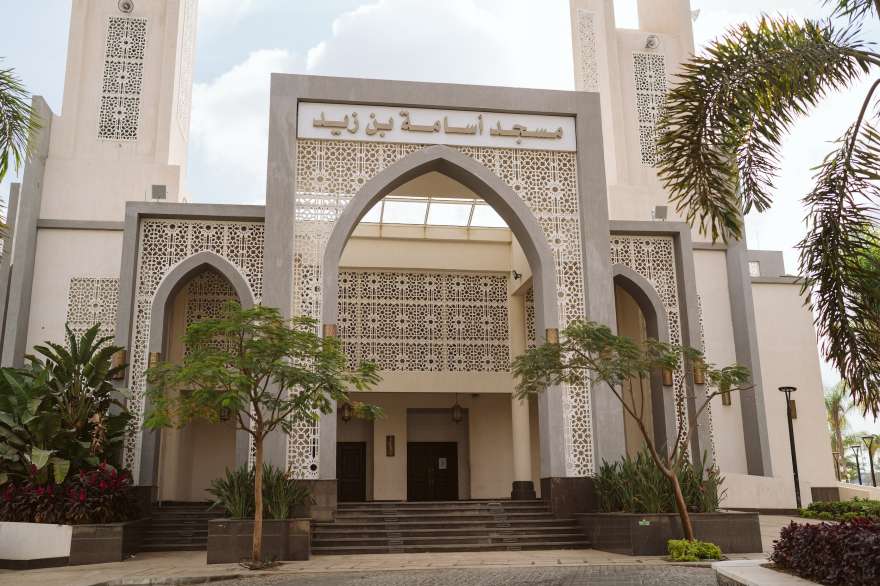
Audio Technology has delivered a JBL Professional and Crown sound system for the Osama Ben Zaid Mosque in Cairo as part of an extensive audio upgrade. Aligning with Egypt’s commitment to honouring Islamic heritage and enhancing spiritual infrastructure, the mosque upgrade was aimed at ensuring sermons, recitations and prayers reach every corner with clarity and balance.Situated in New Cairo, the Osama Ben Zaid Mosque sought a multizone system that could handle varying acoustic conditions while preserving the dignity of the space. Taking these considerations into account, Audio Technology installed JBL’s CBT 70J and CBT 100LA-1 loudspeakers in the main sanctuary, with the aim of delivering broad horizontal dispersion and consistent tonality.The manufacturer’s CBT 50LA-1 speakers were installed in the women’s prayer hall to provide dedicated coverage while ensuring sonic separation from the main hall. Outside, AWC159 loudspeakers support overflow gatherings and seasonal events. The system is powered by Crown XLi and CDi Series amplifiers.“The goal for this project was to create a sound environment that reflects the dignity of the space,” said Mario G Abadeer, design and presales division head at Audio Technology. “With the JBL CBT and AWC speakers, we achieved intelligibility and coverage across every prayer area, both indoors and outdoors, without disrupting the mosque’s architectural harmony.”According to the team, since installation worshippers have experienced greater comfort and connection during services, thanks to even SPL and high speech clarity across all zones.

Read
Audio Technology is blending architectural reverence with contemporary AV solutions in Egypt
article
article

Audio Technology is blending architectural reverence with contemporary AV solutions in Egypt

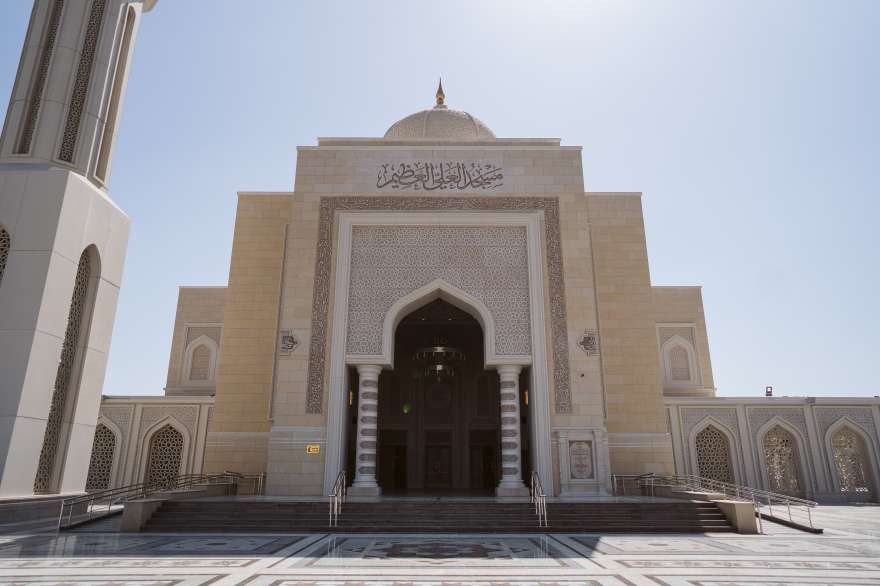
As Egypt not only steps up efforts to preserve and modernise its sacred buildings but also open a host of new religious sites, Cairo-based integrator Audio Technology has been called upon by ministries in Old Cairo and Almaza to give their audiovisual systems some much needed attention.Almaza’s Al-Ali Al-Azeem Mosque and Cairo’s Al Sayeda Nafissa Mosque are both landmark architectural splendours. As such, these projects both required the team to blend architectural reverence with contemporary AV solutions, showcasing the company’s expertise in deploying elegant and high-performance solutions in complex and culturally significant environments.While from a broader AV perspective the house of worship sector in Egypt is dwarfed by other domains in terms of the revenue generated, Audio Technology has gained a reputation for handling some of the country’s most impressive worship projects in recent times, regardless of their denomination.Audio Technology was the very first company to specify Holoplot’s X1 beamsteering array at Misr Mosque, and was also responsible for bringing the Cathedral of the Birth of Christ to life as the new administrative capital outside Cairo began to take shape.“We were enlisted on these projects as we were the consultant’s choice in one case and the contractor’s recommendation in the other, based on our proven track record,” explains Mina Sherif, Audio Technology project manager for the Al Sayeda Nafissa Mosque. “Site visits, design walkthroughs and onsite approvals all played a part in aligning our solution with the client’s vision.”Officially opened during Ramadan by Prime Minister Dr Mostafa Madbouly, the Al-Ali Al-Azeem Mosque is Almaza’s latest architectural icon, forming the spiritual and visual centrepiece of Heliopolis Square. With capacity for 5,000 worshippers, the three-floor building spans more than 8,100m2 and houses an extensive range of community services, including event halls, Quran classrooms, a nursery, clinic, library and dedicated spaces for women.The challenge for Audio Technology at Al-Ali Al-Azeem was to implement a comprehensive AV and security system that would serve the needs of a truly multifunctional religious venue, while still respecting the space’s architectural integrity. The team’s scope included not just professional audio, but CCTV, access control, ticketing, licence plate recognition, parking systems, a broadcast AV infrastructure and smart AV classrooms.“In Al-Ali Al-Azeem Mosque, the main challenge was the size of the venue,” adds Fady Magdi, senior projects coordinator at Audio Technology. “The width and depth of the mosque meant it was critical to choose both the locations and models of speakers very conscientiously in order to produce the quality of sound required for such a monumental project.”On the audio front, the integrator turned to the Harman Professional portfolio, with JBL CBT column speakers chosen across all zones for primary reinforcement due to their consistent SPL distribution, high output and discreet form factor. “The CBT line provides both sound quality and visual appeal,” says Magdi. “Their wide dispersion angle and well-calibrated sound pressure ensure coverage across both the near and far field, which is ideal for large prayer spaces.”Outdoors, the design called on JBL AWC series all-weather speakers which, according to Audio Technology, deliver the warmth and clarity needed for prayer broadcasts in open courtyards but without the harshness of traditional horn systems. Amplification is handled by Crown Audio’s CDi DriveCore and XLS series, with zone management from a BSS BLU-100 processor, offering detailed signal routing and volume regulation throughout the mosque.The choice of microphones was equally deliberate. Shure KSM8 and SM58 wired mics, along with BLX wireless handheld and lavalier options, ensure optimal clarity for Khotbah (sermons), Athan (call to prayer) and general speech. These signals are managed by a Soundcraft 12+2-channel mixer during daily operation.To ensure performance matched expectations, AFMG’s EASE 3D modelling software was deployed during the design phase. “We conducted a full analysis of direct and total sound pressures, including clarity and intelligibility metrics,” continues Magdi. “This level of preparation is how we confidently deliver the high standard of work clients have come to expect from us.”Beyond audio, a state-of-the-art Video Management System (VMS) from Hanwha Vision was implemented to centralise control of the surveillance systems, ensuring integration between the Access Control System (ACS), CCTV infrastructure and parking management system. Additionally, the TV broadcast camera panels and OB van panel have been designed in accordance with the latest industry standards.While Al-Ali Al-Azeem represents the modern addition to the country’s religious landscape, Al Sayeda Nafissa Mosque sits right at the country’s historic heart, in the spiritual quarter of Old Cairo. It’s a place of deep religious importance for Egyptians.Recently renovated under the auspices of President Abdel Fattah El Sisi, it is part of the government’s larger initiative to restore the Ahl Al-Bayt mosques – shrines dedicated to the Prophet Muhammad’s family members.Given the mosque’s heritage, the AV design required sensitive integration that would enhance the auditory experience without disrupting the aesthetic or spiritual ambience. One of the main challenges here involved speaker placement, as the ideal installation height for the loudspeakers coincided with the Quranic inscriptions decorating the mosque’s corniche. “We had to raise the speakers above the corniche and increase the tilt angle to maintain consistent coverage,” Magdi recalls.For sound reinforcement, Audio Technology once again deployed JBL CBT 70J column array speakers in the main halls, leveraging the cabinet’s 16 high-frequency drivers to deliver uniform intelligibility across prayer areas. The women’s prayer section features additional CBT 70Js, while CBT 50LA-1s act as monitor speakers for the Imam. For the outdoor courtyard and surrounding spaces, AWC159 and AWC62 coaxial weather resistant models were chosen for their output and clarity.The entire system at Al Sayeda Nafissa is powered by Crown XTi amplifiers with onboard DSP and controlled by a BSS BLU-100 processor in tandem with Contrio volume interfaces. As in Almaza, Shure microphones, both wired and wireless, handle the various vocal duties, while a Soundcraft Ui24 digital mixer offers wireless control and advanced signal routing in a compact footprint.For both projects, the choice of Harman Professional products and supporting brands was driven by a combination of price, performance, interoperability and client trust. “The light visual impact of the CBT speakers was a decisive factor, particularly in venues where design harmony is paramount,” says Sherif. “The sound quality speaks for itself, but it’s the blend of performance and visual discretion that made it easy to convince the client.”With both sites now completed, client feedback has been overwhelmingly positive. “The best evidence of our work is in the testimony of those who use the system daily,” adds Emad Adly, Audio Technology CEO. “Careful planning, quality components and skilled execution is what defines Audio Technology, and the best evidence of our work is in the testimony of those who use the system daily.”With decades of experience in houses of worship, Audio Technology has become a go-to name in Egypt for both mosque and church AV projects, and has helped to raise AV standards throughout the country. “Worship is a key sector for us,” concludes Adly. “We’ve built trust by consistently delivering systems that meet both spiritual and technical requirements. It’s about more than just audio – it’s about helping people connect through sound.”

Read
Powersoft partners with Audio Technology in Egypt
article
articleMarch 12, 2025

Powersoft partners with Audio Technology in Egypt

Powersoft has appointed Audio Technology as its official distributor in Egypt. The agreement will leverage the latter’s strong reputation in the Middle East, built on engineering, planning, supply and after-sales services, to strengthen the Italian manufacturer’s presence in the region.Audio Technology supplies light current integration and audio consumer electronics throughout the country. Established in 1993 in Cairo, the company boasts over 450 employees and represents over 30 global manufacturers in the pro AV industry, providing a portfolio of solutions across AV, security, professional systems and retail industries.“We have always been aware of Powersoft’s reputation, including in rental staging, and kept being impressed by the products’ exceptional performance, reliability and ease of use,” remarked Nermeen Iskander marketing director of Audio Technology, adding that he aims to enhance Powersoft’s reputation in Egypt through targeted marketing initiatives, educational seminars and competitive pricing strategies.The distributor will focus on expanding Powersoft’s footprint in installations, live productions and hospitality projects. Audio Technology will also offer training programmes, product demonstrations and technical seminars to educate integrators and rental companies on the brand’s products. “We look forward to bringing Powersoft’s solutions to the stadia, hospitality and rental sectors, as their advanced technology product stability makes Powersoft the perfect fit for these markets,” noted Iskander.Iskander added that with the Egyptian economy stabilising and the recent Ras El Hekma project development that is backed by Abu Dhabi investment and expected to become a major tourism and economic hub, he sees significant growth potential for professional AV solutions in the country. “The market is growing and there is a huge demand for strong distributors and integrators to be able to execute large-scale projects and events,” he confirmed. “Partnering with Powersoft allows us to adapt to these trends and expand our market share while maintaining the highest level of excellence to meet all clients’ needs.”Varun Jagger, Powersoft’s EMEIA sales manager, commented: “We are pleased to extend a warm welcome to Audio Technology. The team’s expertise and market knowledge make them the ideal partner to expand our presence in Egypt. With the country’s pro AV sector growing, we are confident that Audio Technology will help us deliver the best solutions to system integrators, rental companies and end-users.”

Read
Audio Technology has installed Holoplot X1 arrays into Masjid Misr
article
articleSeptember 19, 2023

Audio Technology has installed Holoplot X1 arrays into Masjid Misr

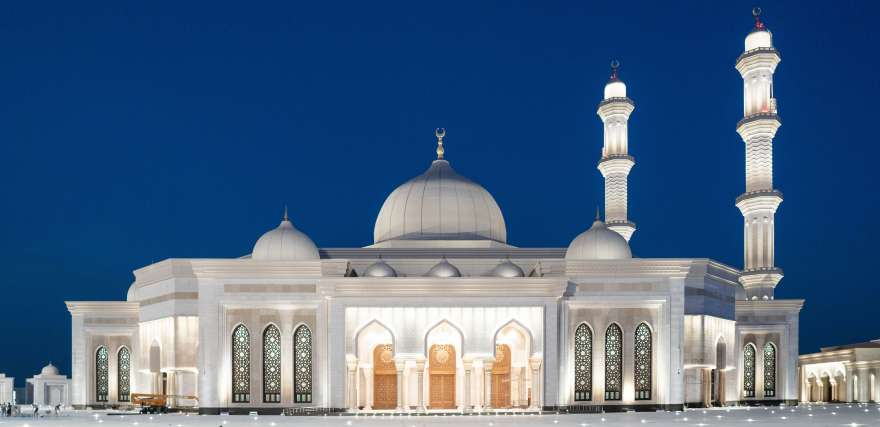
Audio Technology has installed Holoplot X1 arrays into Masjid Misr, the first time beamforming speakers have featured in a major house of worshipAs Cairo has been gradually expanding East with the development of the New Administrative Capital on its outskirts, a number of grand buildings have begun to occupy the new skyline.Serving as the Egypt’s Islamic Centre in the new capital, Misr Masjid takes this grandeur to entirely new levels. One of the largest mosques in Africa, the 19,100m2 complex houses a 9,600m2 mosque nave that can accommodate 12,000 worshippers, three separate domed entrances (as well as a fourth used purely for services) and a 60m-high main dome spanning a diameter of 29.5m. While aesthetically pleasing, the very high ceilings combined with marbled floor and walls create a cacophony of audio issues. Typically, this would be solved with a distributed speaker system, yet that approach introduces its own set of challenges.Hoping to avoid all this, systems integrator Audio Technology opted to go in a new direction, installing Holoplot X1 arrays for the first time in a major house of worship. Instead of hundreds of compact loudspeakers littering the building, Audio Technology, working closely with the German manufacturer, has managed to cover all of the necessary areas with just nine discreetly placed X1 arrays – six positioned on the front wall, two on the dome base and one to cover the rear. This is a 70% reduction in speaker positions compared to the more conventional solution.Geometrically, the building is basically a room within a room, effectively creating corridors around the perimeter of the central worship area that span 93m in length and 18m in width. X1s 3D audio beamforming capabilities allow for sound to be contained within defined zones which enable the creation of ‘sound corridors’ extending up to 100m in length with minimal spillage – perfectly suited for the mosque’s long corridors. To optimise intelligibility further, all areas not regarded as listening areas or areas that could cause reflections are designated as avoidance zones within the Holoplot design software. Two 4x2 X1 arrays situated on the far left and right-hand side of the building create the coverage corridors without any drop in level over 93m-long distance.Positioned further inwards on either side of the entrance, the frontal system consists of X1 arrays in 3x1 and 2x1 configurations. This element covers the frontal congregation space, with tailored beams to avoid the mihrab and minbar. The first wavefront draws localisation to the front wall, avoiding feedback and interference echoes. A further two X1 arrays in a 2x2 configuration fixed at the dome base provide coverage for the audience area underneath, while one concealed in the ceiling covers the rear. Despite mounting positions of 23m up, the arrays are still able to achieve a high direct-reverberant ratio and speech intelligibility.The installed system had to handle an existing reverberation time of 6s, caused by both the marble interior and massive dome. But by managing to not excite the reverberant field – directing energy away from reflective surfaces and preventing the need for large amounts of acoustic treatment – the teams were able to deliver an STI of between 0.5 and 0.7298 to 98% of standing and kneeling positions, each targeted area being served by at least one speaker module.“There were a lot of ideas explored inside Misr Masjid that were entirely new,” recalls Holoplot’s Emad Elsaghir, who worked closely with the Audio Technology team both remotely during the design stages and physically on-site for commissioning. “It’s not only new technology, but a new way of implementing that technology in such a venue. In my opinion, it creates a new concept for worship houses in general. As part of our go-to market campaign for the X1s, we approached the project consultants and introduced the technology and the advantages that it offers, not for this project specifically. They were impressed, and when they became involved with the mosque, were very keen to explore this approach further.“Our solution is very different from typical cases, where the classical technologies and products and methodologies are already well-established. So, we provided them with extensive evidence of our approach through data simulations. It was an incredibly detailed study that considered all factors. It showed that the proposed solution could solve all of the issues raised by the stakeholders, including the architect who of course played a major role. The interior of the room is a masterpiece and they wanted to keep it intact.”In order to physically conceal the X1 modules, specially crafted metal screens and painted cloth were used that were acoustically transparent while ensuring the speakers are invisible to worshippers. “The ability to control sound in both the horizonal and vertical plane means that we can go as high with the installation as we wish, way higher than a line array which are limited to close to ear height,” notes Elsaghir.” By placing the arrays high up, we could reduce the amount of changes made to the marbled walls and ceiling, the pillars, the ornaments, the scripts and everything that you have inside the room. We can minimise change by minimising the amount of acoustic treatment needed. This was a very important incentive for the architect.”Emad Shenouda, projects director at Audio Technology, sums up the team’s experience working with X1. “I’m pleased to say that together with Holoplot, we met the client’s brief of creating a fully integrated system that satisfies all stakeholders. The project was full of challenges, starting from the size of the mosque, the room acoustics and of course project deadlines. Thanks to X1’s ability to not only control sound in the vertical but also horizontal it achieves unbelievable intelligibility, thought impossible in a space clad in marble and featuring a huge dome at its centre. Holoplot exceeded our expectations in both the quality of sound and in hiding the equipment in such a way that it blends in seamlessly with the interior.”A pair of X1 arrays flanking the main entrance“The Audio Technology is highly capable and despite it being their first Holoplot project, I was impressed at how fast they made themselves familiar with the system,” concludes Elsaghir. “I conducted some training sessions with them remotely – the early stages of the project were happening during Covid times – and although the arrays were installed in very tight and awkward positions, they were able to install everything quickly, neatly and in harmony with our instructions. The interior designers were always changing and negotiated everything very professionally.”Despite Elsaghir assessment that the Holoplot solution sets a new path for houses of worship, not all worshippers are blessed with Africa’s biggest mosque in their backyard. The company, however, has just realised unveiled its smaller X2 array which brings the same beamforming capabilities in a smaller format.“The ability to hide the arrays inside the walls, the high ceilings, marble throughout and generally size of the mosque made it ideal for X1. In smaller rooms, I would say X1 is still a good choice depending on the specific case and the available space. But now we have the X2 and it is the perfect option for smaller houses of worship. It has the same features and is optimised for speech applications. The smaller form-factor means it can integrate much more easily into everyday interior design.”

Read